Can ABA Help My Child Make and Keep Friends?
Maybe your child plays alone at recess, or comes home asking why the other kids won't play. Maybe they make a friend, and a few weeks later the friendship fades and no one is quite sure why. For many parents, friendship is the goal that matters most and feels hardest to teach.
At Creating Brighter Futures, we treat friendship as a set of skills that can be learned one small step at a time, in a way that fits who your child already is. The goal is not to change your child's personality. It is to give them the tools to find people they enjoy and keep those connections going.
Do Children With Autism Want Friends?
Most do. A 2024 review of studies in which children with autism described their own friendships found that the children wanted friends, valued shared interests and companionship, and could make and keep friendships. Those friendships may simply look different. Your child might prefer one or two close friends to a big group, or connect with someone over a favorite topic rather than long conversations. Both are real friendships, and the best measure is whether your child enjoys them.
.png)
Why Friendship Can Be Harder to Build
Friendship is made of many small skills most of us learned without noticing: joining a game already in progress, taking turns in a conversation, noticing when someone is bored, and bouncing back after a disagreement. Each can be a hurdle for a child with autism. Motivation matters too. For many children, attention from other people is not very rewarding at first, so we pair time with peers with activities your child already loves until being with other kids becomes enjoyable on its own.
How ABA Teaches Friendship Skills
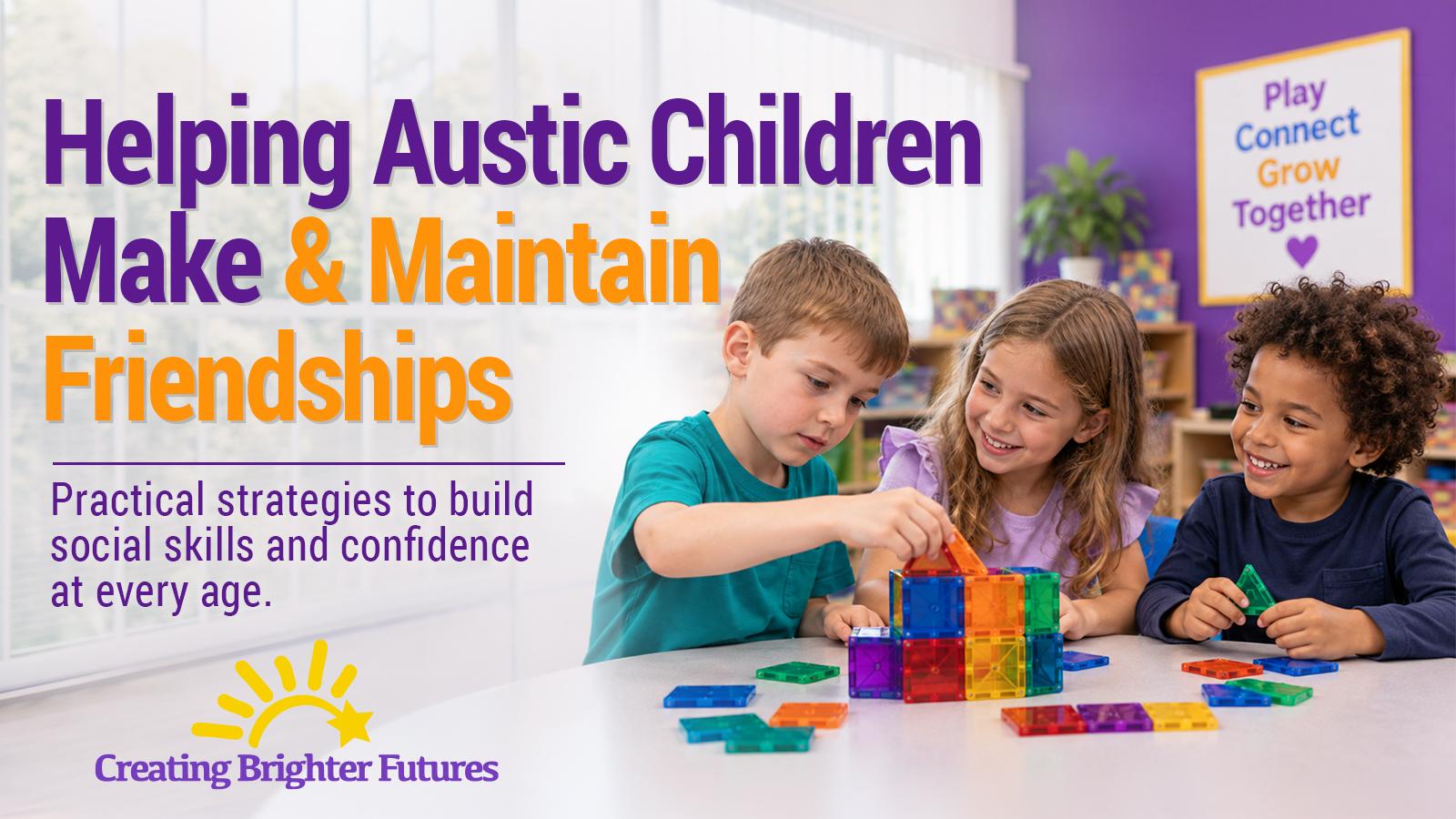
ABA breaks a big skill into its smallest parts and teaches each one in order. For friendship, that might start with playing near another child, then sharing a toy, then trading turns, then playing a game together. Our sessions are play-based and follow your child's lead, so this practice happens during activities your child picks. Goals change as children grow. Younger children practice sharing, playing with others on the playground, and eating lunch in a group. School-age children work toward playdates with neighbors, cousins, or classmates. Teens learn how to find the right group of friends, join a conversation and tell whether they are welcome, leave a conversation gracefully, and recognize when they are being teased or bullied.
.png)
Making a Friend vs. Keeping One
Making a friend and keeping one take different skills. A first connection might happen at recess, but a friendship lasts because someone follows up by suggesting a get-together, being a good host, losing a game gracefully, and working through a disagreement. These maintenance skills are often where children need the most support. In research on the UCLA PEERS program, a friendship course in which parents help teens practice between sessions, teens showed significant gains in their social skills, a sign that keeping friends is something that can be taught.
Simple Ways to Help at Home
You don't need to script every interaction. A few habits can make a real difference:
- Start with shared interests, such as a club, class, or activity built around something your child already loves
- Keep get-togethers short and centered on an activity, and end while everyone is still having fun
- Talk through the plan beforehand, including how to greet a friend and what you might play
- Help your child follow up afterward with a message, a drawing, or an invitation to meet again
- Ask your child's teacher how recess and lunch are going, since those are the times friendships often start
How We Help Children Build Friendships
At our center, children work on friendship goals in one-on-one sessions and, when they are ready, in small social skills groups where they practice with peers. Each child in a group also has individual goals. Our parent training sessions show you the strategies that work for your child, so practice continues at home and on the playground. Spots in our Summer Group Programs are limited and evaluations typically start in April, and our Fall/Winter Programs run during the school year. To see how these skills carry into the classroom, read ABA Therapy & School: Can My Child Do Both?, or Schedule a Tour & Consult to meet our team in Ann Arbor at no cost.
Frequently Asked Questions
-
Is it okay if my child only has one or two friends?
Yes. The number matters far less than the quality. One friend your child enjoys spending time with can make a real difference in how connected and happy they feel.
-
Should my child look for friends who are also on the spectrum?
There is no single right answer. Many children connect easily with peers who share their interests or communication style, including other neurodivergent children, while others click with a wide mix of kids. Let your child's interests lead.
-
What if my child says they don't want friends?
Take them at their word, and keep watching. Some children are content with less social time, while others say they don't care because past attempts went badly. If your child seems lonely or left out, talk with your BCBA about gentle, low-pressure ways to build connections.
-
How will I know if my child is being teased if they can't tell me?
Watch for changes such as not wanting to go to school, new worries about recess or the bus, or mood shifts after certain activities. Share what you notice with your child's teacher and ABA team so everyone can watch for it together.